TIMBER WOLF H8511 Bandsaw Blade 690550185113 93-1/2 1/4 .025
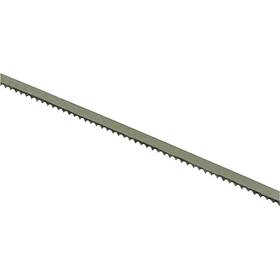
( Brand: Timber Wolf ), ( Manufacturer Part Number: H8511 ), ( Type: Bandsaw Blades ), ( Country Of Origin: Se ), ( UPC: 690550185113 )
Review TIMBER WOLF 93-1/2 Inch 1/4 .025 Tpi Raker Bandsaw Blade
The **Timber Wolf H8511 93-1/2" x 1/4" x 0.025" 10-Band Saw Blade** is a premium, high-performance cutting tool designed for heavy-duty woodworking, milling, and industrial applications where precision, durability, and efficiency are paramount. Engineered with a **93-1/2-inch diameter** and a **1/4-inch thick back**, this blade strikes an ideal balance between rigidity and flexibility, ensuring clean, accurate cuts across a wide range of materials, from softwoods and hardwoods to composite boards and engineered lumber. The **0.025-inch kerf thickness** minimizes material waste while maintaining exceptional cutting clarity, making it a cost-effective choice for both professional shops and dedicated hobbyists. What truly sets this blade apart is its **10-band construction**, featuring a **high-quality, heat-treated alloy steel** core that resists deformation, wear, and vibration, even under prolonged use. The **precision-ground teeth** are designed with a **raker set pattern**, optimized to reduce tear-out, improve surface finish, and extend blade life by distributing cutting forces evenly across the bands. Whether tackling crosscuts, rip cuts, or intricate joinery, this blade delivers **consistent, chip-free performance**, making it a staple in woodworking operations that demand reliability. Built to withstand the rigors of continuous operation, the Timber Wolf H8511 is an excellent investment for those seeking a blade that combines **superior craftsmanship with long-lasting performance**, ensuring years of trouble-free service in demanding applications.
The Timber Wolf H8511 is a popular bandsaw blade designed for general-purpose woodworking, metal cutting, and other applications. Below is a detailed breakdown of its pros and cons, followed by a conclusion and recommendation.
---
**Pros:**1. **Versatility**: The H8511 is a 93.5-inch (93-1/2") blade with 10 teeth per inch (TPI) and a 1/4-inch kerf width, making it suitable for a wide range of materials, including wood, soft metals, and some plastics. The 0.025-inch (25 mil) thickness is ideal for lighter-duty applications where precision and smooth cuts are desired.
2. **Durability**: Timber Wolf blades are known for their high-quality steel construction, which ensures longevity and resistance to wear, especially when properly maintained. The H8511 is designed to handle moderate workloads without frequent replacement.
3. **Smooth Cuts**: The 10 TPI tooth count provides a good balance between speed and precision, making it effective for ripping, crosscutting, and contouring in woodworking. The blade s design minimizes tear-out and splintering in softer woods.
4. **Compatibility**: This blade fits most standard bandsaws with a 3/4-inch or 7/8-inch arbor, making it a versatile choice for home workshops and small businesses. The 10-band design (10 teeth per inch) is common for general-purpose use.
5. **Affordability**: Compared to specialty blades, the H8511 offers good value for its performance in common woodworking tasks. It is often priced lower than high-end blades designed for specific materials like hard metals or exotic woods.
6. **Easy to Find**: As a widely used blade, the H8511 is readily available from Timber Wolf and other retailers, reducing the risk of delays or compatibility issues.
---
**Cons:**1. **Limited for Heavy-Duty Work**: While durable, the 0.025-inch thickness may not be ideal for high-volume production or cutting very hard materials like steel or dense hardwoods repeatedly. Thicker blades (e.g., 0.032-inch or 0.040-inch) are often preferred for such tasks.
2. **Not Ideal for Fine Detail Work**: The 10 TPI tooth count is not fine enough for intricate or detailed cuts, such as scrollwork or delicate wood carving. For such applications, blades with 12 TPI or higher are typically recommended.
3. **Maintenance Requirements**: Like all bandsaw blades, the H8511 requires regular tensioning, tracking adjustments, and occasional sharpening or replacement to maintain optimal performance. Neglecting maintenance can lead to poor cuts, blade breakage, or premature wear.
4. **Potential for Dulling**: Frequent use on abrasive materials (e.g., plywood, particleboard, or metals) can cause the teeth to dull more quickly. This may require more frequent sharpening or replacement compared to blades designed for specific materials.
5. **Noise and Vibration**: Bandsaw blades can generate noise and vibration, especially if not properly tensioned or tracked. The H8511 may contribute to these issues if the bandsaw is not well-maintained or if the blade is not aligned correctly.
6. **Limited for Specialized Tasks**: For tasks requiring very thin kerfs (e.g., cutting small pieces of wood without excessive material removal) or high-speed cutting, other blades (e.g., thinner or finer-toothed options) may be more appropriate.
---
**Conclusion:**The Timber Wolf H8511 93.5-inch, 10 TPI, 1/4-inch kerf, 0.025-inch blade is a solid choice for general woodworking and light metal cutting. It offers a good balance of versatility, durability, and affordability, making it suitable for hobbyists, small workshops, and occasional users. However, it is not ideal for heavy-duty work, fine detail cutting, or high-volume production. Proper maintenance and alignment are essential to maximize its performance and lifespan.
---
**Recommendation:**If you are a woodworker primarily working with softwoods, plywood, or light metals and need a reliable, all-purpose blade, the Timber Wolf H8511 is an excellent option. It will serve you well for ripping, crosscutting, and general shaping tasks. However, if your work involves frequent cutting of hardwoods, metals, or requires fine detail work, consider supplementing your collection with blades tailored to those specific needs (e.g., thicker blades for metals or finer-toothed blades for intricate cuts).
For best results, ensure your bandsaw is properly set up with the correct tension and tracking for the H8511. Regularly inspect the blade for signs of wear or damage, and replace it when necessary to avoid compromising cut quality or safety. If you are unsure about blade selection for specific projects, consult your bandsaw s manual or seek advice from experienced woodworkers.
Details:
Tooth Type: The most common tooth types for wood blades are:Standard or Raker: Equally spaced teeth set at a rake angle. Blades are sized to fit Grizzly bandsaw as well many other brands. Just match up the length in charts with recommended for your bandsaw. Top quality saw steel manufactured to precise tolerances and guaranteed welds result in very smooth cutting blades.
Each type of tooth set removes material in a different manner, leaving cuts with characteristics.Alternate: An all-purpose arrangement where the teeth are bent evenly left and right blade.Raker: Three recurring group one left, right, that is not. Speed, finish, etc. Blade length : Measured by the blade circumference, lengths are specific to each bandsaw. Specifications: length : 93-1/2 width : 1/4 Type: Carbon Tool Steel TPI: 10 Raker Gauge: 0.025. Tooth Set: Two common tooth sets for wood bandsaw blades are alternate and raker.
The raker set is ideal for most contour cuts. They are determined by the wheel diameter and distance between wheels.Blade width : Measured from back of blade to tip tooth the widest point.
part #: h8511 prices
- $23.00-$54.75
specifications sawbladeother:
- brand: Timber Wolf
- mpn: H8511
- type: Bandsaw Blades
- country of origin: Se
- upc: 690550185113
shipping sawbladeother:
- class: Standard
- service: Standard
- transit: 3-5 Days
- type: Fixed
- cost: $14.99
seller sawbladeother:
- # reviews: 19786
- rating: 99.6%
- city: Bellingham, WA
general sawbladeother:
- Power Tool Air Tool Accessories > Saw Blades > Other Saw Blades
- condition: New
offer sawbladeother:
- sold: 0
- availability: In Stock
- options: Ship-to-home
- quantity: 8
- started: April 10, 2026
returns sawbladeother:
- policy: Returns Accepted
- paid by: Buyer
- method: Money back
- time: 30 Days
payments sawbladeother:
- credit card: Discover
- other
- wallet: Paypal
Timber Wolf H8511 Is Similar To:
- Cs-590 Timber Engine Wolf Bar 59.8 Cc Echo 20 Chainsaw Grade Professional (31% similar) 8 cc engine new...(December 11th, 2014)
- Timberwolf Psw116343 Timber Wolf Band Saw Blade 116 Inch X 3 4 3 Tpi 025 (36.6% similar) Number of teeth: 116. It leaves a very nice finish. Style: modern. Product dimensions: 13 l x manufacturer: PS wood machines. Our welds are warranted. Timber Wolf band saw blades from PS wood machines, run cooler, last longer and track true. Compatible material: wood. It is an excellent blade for ...(August 27th, 2025)
- Suizan Tmrp-001 Replacement Blade For Timber Framing Saw 11 Inch (22.9% similar) Batteries required ?: no. Power source: hand powered. Product dimensions: 12.8 l x 0.03 w 1.77. It can be used for a wide range of purposes such as crafts and outdoor activities. Color: silver. Replacement blade for Susan Japanese Timber framing saw. Included components: bare tool. Handle material: ...(September 13th, 2025)
- Timber Wolf 1203pc 09975 99 3 4 Inch X 1 2 3 Tpi Band Saw Blade (70.8% similar) Batteries included?: no. Precision induction hardening throughout the blade vs competitors flame. Is discontinued by manufacturer: no. Brand: Timber Wolf. Milling the teeth of blades into a piece strip steel produces finished, razor sharp edge without ever having to stamp or grind. Timber WOLF3/4 x ...(November 5th, 2025)
- Timberwolf 111-3423vpc Timber Wolf 111 Inch X 3 4ftft 2-3tpi 025 Silicon Steel Bandsaw Blade (60% similar) Timber Wolf 111 x 3/4'' 2-3TPI .025 silicon steel bandsaw blade: material: alloy. Item thickness: 0.03 inches. The result is a blade with the perfect balance of steel, width , and thickness,with precision set teeth. Package dimensions: 12 x 1 inches; 9.6 ounces. What this means for you is a ...(November 5th, 2025)
- Timber Wolf H8525 93-1 2 Inch X 3 4 025 3 Tpi Thin Bandsaw Blade (86.4% similar) Just match up the length in charts with recommended for your bandsaw. Speed, finish, etc. Blade length : measured by the blade circumference, lengths are specific to each bandsaw. Tooth type: the most common tooth types for wood blades are:standard or raker: equally spaced teeth set at a rake ...(November 20th, 2025)
- Timber Wolf T25023 180 Inch X 3 8 032 3 Tpi As Bandsaw Blade (71.9% similar) Alternate set as tooth design in a 5 raker set PATTERN.FEATURES:3/8 width , 180 length 3 tpi tooth per inch 1-1/4 radius of CUT.056 seventieth hook angle 6.5 degrees. Designed for roughing or milling green wood, this Timber Wolf blade can bite though hardwoods and softwoods alike 3 - 12...(November 20th, 2025)
- Timber Wolf T30645 120 Inch X 1 2 025 3 Tpi Pos Claw Bandsaw Blade (76.1% similar) Just match up the length in charts with recommended for your bandsaw. Top quality saw steel manufactured to precise tolerances and guaranteed welds result in very smooth cutting blades. The raker set is ideal for most contour cuts. Each type of tooth set removes material in a different manner, ...(November 20th, 2025)
- Timber Wolf T30652 120 Inch X 3 4 025 2-3 Vp Tpi Pos Claw Bandsaw Blade (71.9% similar) Each type of tooth set removes material in a different manner, leaving cuts with characteristics.alternate: an all-purpose arrangement where the teeth are bent evenly left and right blade.raker: three recurring group one left, right, that is not. Top quality saw steel manufactured to precise ...(December 16th, 2025)
- Timber Wolf H8521 93-1 2 Inch X 1 2 025 6 Tpi Pos Claw Bandsaw Blade (86.8% similar) Tooth type: the most common tooth types for wood blades are:standard or raker: equally spaced teeth set at a rake angle. Tooth set: two common tooth sets for wood bandsaw blades are alternate and raker. Blades are sized to fit grizzly bandsaw as well many other brands. Just match up the length in ...(December 16th, 2025)
- Timber Wolf H8600 143 Inch X 1 8 025 14 Tpi Hp Bandsaw Blade (81.3% similar) Speed, finish, etc. Blade length : measured by the blade circumference, lengths are specific to each bandsaw. They are determined by the wheel diameter and distance between wheels.blade width : measured from back of blade to tip tooth the widest point. Tooth type: the most common tooth types for ...(December 16th, 2025)